

X
  • About
  • Advertise
  • Contact
  • Events
Subscribe to our Newsletter
  • News
    • Markets
    • Regulation
    • Super
    • M&A
    • Tech
    • Appointments
  • Podcast
  • Webcasts
  • Video
  • Analysis
  • Promoted Content
No Results
View All Results
  • News
    • Markets
    • Regulation
    • Super
    • M&A
    • Tech
    • Appointments
  • Podcast
  • Webcasts
  • Video
  • Analysis
  • Promoted Content
No Results
View All Results
No Results
View All Results
Home News Markets

RBA explains rationale behind its latest decision

The RBA said it considered several options for the cash rate decision at the December meeting.

by Maja Garaca Djurdjevic
December 20, 2022
in Markets, News
Reading Time: 3 mins read
Share on FacebookShare on Twitter

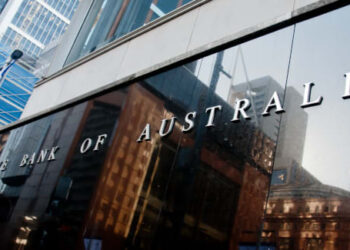
The Reserve Bank of Australia (RBA) considered a 50 basis point (bp) increase, a 25 bp increase or no change in the cash rate at its last meeting for 2022, it revealed in the minutes of its December meeting on Tuesday.

The central bank announced another 25 bp rate hike on 6 December, taking the official interest rate to 3.1 per cent.

X

In deliberating its move, the RBA said arguments for a 50 bp increase stemmed from the fact that inflation remained too high, and that the economy continued to operate with excess demand.

The bank said its board reflected on other economies that had earlier been in a similar situation to Australia and had subsequently seen wages growth pick up strongly and admitted to being worried that returning inflation to target was likely to involve a period of very weak demand, and possibly a recession.

But having determined that “Australia was not yet in such a situation”, and that the inflation mindset was shifting, the board decided to take more “pre-emptive action”.

The arguments for a 25 bp increase also recognised the need to bring demand and supply in the economy more into balance, the RBA said. It also acknowledged that there had already been a significant cumulative increase in interest rates and that the full effects of this adjustment would take time to occur.

Flagging the possibility that the policy changes might be transmitted to the economy more slowly than usual, the RBA said, “the policy changes would begin to have more of an effect through the course of 2023”.

The RBA predicted that the share of household income being spent on required mortgage payments would reach around its previous highest level in late 2023. This, it said, together with declining real incomes and falling house prices and sales volumes, is expected to weigh on consumption in the year ahead, while global demand is also expected to weaken.

Finally, the arguments for no change in the cash rate placed further emphasis on the lagged effects of the large policy adjustment to date, and the value of proceeding cautiously in an uncertain environment.

However, members noted that the bank’s most recent forecasts indicated that, even with further increases in the cash rate as incorporated into the November forecasts, inflation was expected to take several years to return to the target range. Moreover, the RBA reflected on the fact that no other central bank had yet paused.

“Members acknowledged that there were arguments in favour of each of these courses of action. They concluded that the case to increase the cash rate by 25 basis points at the present meeting was the strongest one,” the RBA said.

“A further increase in the cash rate was likely to be necessary to achieve a more sustainable balance of demand and supply, but there had already been a material increase in the cash rate in a short period of time and there were lags in the operation of policy”.

The RBA also acknowledged that public perception played a part in its decision, noting the importance of “acting consistently”.

“Shifting to either larger increases or pausing at this point with no clear impetus from the incoming data would create uncertainty about the board’s reaction function”.

Ultimately, the RBA reiterated that it expects to increase rates further and noted that a range of options for the cash rate could be considered again at upcoming meetings in 2023.

“The board did not rule out returning to larger increases if the situation warranted. Conversely, the board is prepared to keep the cash rate unchanged for a period while it assesses the state of the economy and the inflation outlook,” it concluded.

Related Posts

Banks flag February rate hike as RBA ‘on a knife edge’

by Adrian Suljanovic
December 17, 2025

Major banks have shifted to expect a February rate hike after stronger growth and stubborn inflation raised policy risks. Australia’s...

Investors most bullish since 2021 but BofA flags private credit risk

by Laura Dew
December 17, 2025

Going into 2026, investors are the most bullish they have been in 3.5 years, according to Bank of America. The...

Australian Super’s CIO to depart from role

by Laura Dew
December 17, 2025

Australian Super’s chief investment officer, Mark Delaney, is to step down from the fund after more than 25 years in...

Leave a Reply Cancel reply

Your email address will not be published. Required fields are marked *

VIEW ALL
Promoted Content

Why U.S. middle market private credit is a powerful income solution for Australian institutional investors

In today’s investment landscape, middle market direct lending, a key segment of private credit, has emerged as an attractive option...

by Tim Warrick
December 2, 2025
Promoted Content

Is Your SMSF Missing Out on the Crypto Boom?

Digital assets are the fastest-growing investment in SMSFs. Swyftx's expert team helps you securely and compliantly add crypto to your...

by Swyftx
December 2, 2025
Promoted Content

Global dividends reach US$519 billion, what’s behind the rise?

Global dividends surged to a record US$518.7 billion in Q3 2025, up 6.2% year-on-year, with financials leading the way. The...

by Capital Group
November 18, 2025
Promoted Content

Why smaller can be smarter in private credit

Over the past 15 years, middle market direct lending has grown into one of the most dynamic areas of alternative...

by Tim Warrick, Managing Director of Principal Alternative Credit, Principal Asset Management
November 14, 2025

Join our newsletter

View our privacy policy, collection notice and terms and conditions to understand how we use your personal information.

Latest Podcast

Podcast

Relative Return Insider: RBA holds, Fed cuts and Santa’s set to rally

by Staff Writer
December 11, 2025
After more than two decades, InvestorDaily continues to be an institution that connects and influences Australia’s financial services sector. This influential and integrated media brand connects with leading financial services professionals within superannuation, funds management, financial planning and intermediary distribution through a range of channels, including digital, social, research, broadcast, webcast and events.

Subscribe to our newsletter

View our privacy policy, collection notice and terms and conditions to understand how we use your personal information.

About Us

  • About
  • Advertise
  • Contact
  • Terms & Conditions
  • Privacy Collection Notice
  • Privacy Policy

Popular Topics

  • Markets
  • Appointments
  • Regulation
  • Super
  • Mergers & Acquisitions
  • Tech
  • Promoted Content
  • Analysis

© 2025 All Rights Reserved. All content published on this site is the property of Prime Creative Media. Unauthorised reproduction is prohibited

No Results
View All Results
NEWSLETTER
  • News
  • Markets
  • Regulation
  • Super
  • M&A
  • Tech
  • Appointments
  • Podcast
  • Webcasts
  • Promoted Content
  • Events
  • About
  • Advertise
  • Contact Us

© 2025 All Rights Reserved. All content published on this site is the property of Prime Creative Media. Unauthorised reproduction is prohibited