
X
  • About
  • Advertise
  • Contact
  • Events
Subscribe to our Newsletter
  • News
    • Markets
    • Regulation
    • Super
    • M&A
    • Tech
    • Appointments
  • Podcast
  • Webcasts
  • Video
  • Analysis
  • Promoted Content
No Results
View All Results
  • News
    • Markets
    • Regulation
    • Super
    • M&A
    • Tech
    • Appointments
  • Podcast
  • Webcasts
  • Video
  • Analysis
  • Promoted Content
No Results
View All Results
No Results
View All Results
Home News

Agri-investors graze in long paddock

Cheap, unsustainably-sourced agricultural products still dominate the market, so allocations need to be hedged in more ways than one.

by Staff Writer
June 7, 2012
in News
Reading Time: 3 mins read
Share on FacebookShare on Twitter

Sustainable agriculture investment must be long term, as it will be years before investors begin to benefit from sustainable practices, especially with cheaper, unsustainably-sourced agricultural products still dominating the market.

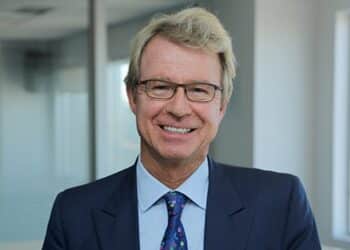
Christian Super chief executive Peter Murphy said investors should also be aware of inherent risks.

X

Murphy said “the high volatility of commodity prices and outputs directly increases the uncertainty of the return on investment. Additionally, for products meant for export markets, there is also the foreign currency risk”.

Investments in agriculture, he said, should therefore have comprehensive risk management through commodity prices and foreign currency hedging.

“This requires a strong understanding of both the agriculture industry as well as hedging instruments,” he said.

AMP Capital head of sustainable funds Dr Ian Woods agreed risk management and long-term perspectives were crucial. Woods warned there were long- and short-term risks.

“For any particular investment, the longer-term impact of climate change is a risk that also needs to be considered along with the shorter-term risks of commodity prices and foreign exchange,” he said.

“However, the long-term drivers for sustainable agriculture appear sound, with continued population and economic growth, especially in Asia, and greater focus on quality of produce providing strong underlying drivers.”

Australian Ethical Investment portfolio manager Andy Gracey and Australian equities analyst Dr Mark Wade said they doubted if “pure agricultural ‘product’ investments lend themselves to being listed under a corporate structure”.

Gracey said the food scarcity arguments were talked about regularly in investment markets, “but the reality is there are few ways to play it”.

“Grain handlers have been successful, but they are not farmers. There has been some smallish success in companies buying sheep land, for example, and converting this into higher-value dairying land, but this is for all intents and purposes a land value investment,” he said.

“There are listed dairy processing companies, but this also does not make a lot of sense when ultimately the milk suppliers operate under a more cooperative-type structure.”

Beyond prices and currency movements, Murphy said Australian farmers faced two other key risks.

The demand for Australian produce might slow, especially with stagnant economic growth in export markets in Asia and Europe.

The Australian Bureau of Agricultural and Resource Economics and Sciences estimated net cash income from exports would fall 1.7 per cent a year over the next five years.

Additionally, farmers would have to manage the climate change risk and greater uncertainty in long-term climate conditions and higher frequency of short-term extreme weather conditions.

Despite cheaper, unsustainably-sourced agricultural products, current trends showed greater consumer awareness and higher demand for sustainably-produced food, despite higher prices.

IBISWorld estimated organic food revenues over the five years through to 2011/12 grew by an average 11.6 per cent a year, and this growth was expected to continue.

Agricultural commodity prices and, as a result, the potential income normally rose with inflation, providing a good inflation hedge.

As was the case with most impact investment, the non-financial skills had a much greater bearing on success than financial skills, Murphy said.

Unlike conventional investments, farm managers were responsible for selecting suitable assets, suitable products to focus on, and the right sustainable tools and practices, he said.

Investing in sustainable agriculture therefore required more confidence in the specialised skills and abilities of farm managers than the fund managers, which might introduce significant key people risk, he added.

Gracey said there were also arguments about how motivated corporate-owned farmers were compared to owner-occupy farmers with their livelihood at stake.

“Farming returns are too low and volatile, while investors on listed markets are looking for consistency in profits,” he said.


Related Posts

Janus Henderson to go private following US$7.4bn acquisition

by Laura Dew
December 23, 2025

Global asset manager Janus Henderson has been acquired by Trian Fund Management and General Catalyst in a US$7.4 billion deal....

Australian Super targets $1trn within a decade

by Adrian Suljanovic
December 22, 2025

Australia’s largest superannuation fund has announced it is targeting $1 trillion in assets by 2035, up from its current size...

The biggest people moves of Q4

by Olivia Grace-Curran
December 22, 2025

InvestorDaily collates the biggest hires and exits in the financial service space from the final three months of 2025. Movements...

Leave a Reply Cancel reply

Your email address will not be published. Required fields are marked *

VIEW ALL
Promoted Content

Why U.S. middle market private credit is a powerful income solution for Australian institutional investors

In today’s investment landscape, middle market direct lending, a key segment of private credit, has emerged as an attractive option...

by Tim Warrick
December 2, 2025
Promoted Content

Is Your SMSF Missing Out on the Crypto Boom?

Digital assets are the fastest-growing investment in SMSFs. Swyftx's expert team helps you securely and compliantly add crypto to your...

by Swyftx
December 2, 2025
Promoted Content

Global dividends reach US$519 billion, what’s behind the rise?

Global dividends surged to a record US$518.7 billion in Q3 2025, up 6.2% year-on-year, with financials leading the way. The...

by Capital Group
November 18, 2025
Promoted Content

Why smaller can be smarter in private credit

Over the past 15 years, middle market direct lending has grown into one of the most dynamic areas of alternative...

by Tim Warrick, Managing Director of Principal Alternative Credit, Principal Asset Management
November 14, 2025

Join our newsletter

View our privacy policy, collection notice and terms and conditions to understand how we use your personal information.

Latest Podcast

Podcast

Relative Return Insider: MYEFO, US data and a 2025 wrap up

by Staff Writer
December 18, 2025
After more than two decades, InvestorDaily continues to be an institution that connects and influences Australia’s financial services sector. This influential and integrated media brand connects with leading financial services professionals within superannuation, funds management, financial planning and intermediary distribution through a range of channels, including digital, social, research, broadcast, webcast and events.

Subscribe to our newsletter

View our privacy policy, collection notice and terms and conditions to understand how we use your personal information.

About Us

  • About
  • Advertise
  • Contact
  • Terms & Conditions
  • Privacy Collection Notice
  • Privacy Policy

Popular Topics

  • Markets
  • Appointments
  • Regulation
  • Super
  • Mergers & Acquisitions
  • Tech
  • Promoted Content
  • Analysis

© 2025 All Rights Reserved. All content published on this site is the property of Prime Creative Media. Unauthorised reproduction is prohibited

No Results
View All Results
NEWSLETTER
  • News
  • Markets
  • Regulation
  • Super
  • M&A
  • Tech
  • Appointments
  • Podcast
  • Webcasts
  • Promoted Content
  • Events
  • About
  • Advertise
  • Contact Us

© 2025 All Rights Reserved. All content published on this site is the property of Prime Creative Media. Unauthorised reproduction is prohibited